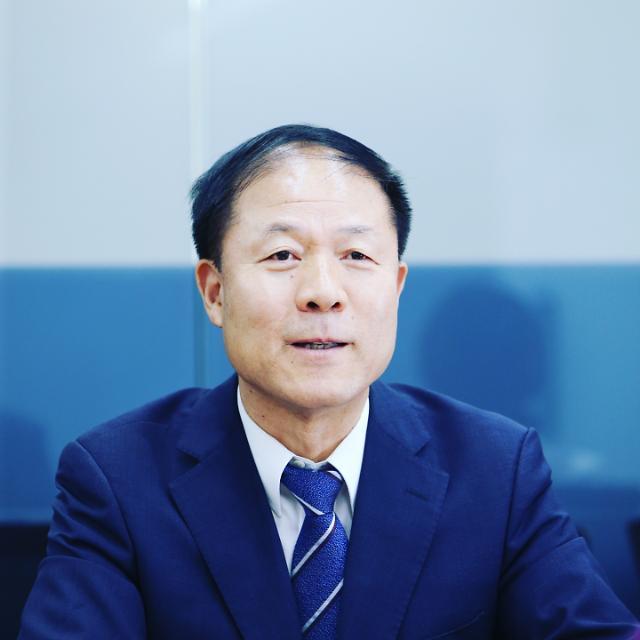
 Choi Min-sung, Chairman of Delco Realty Group
SEOUL, November 03 (AJP) - Human history can be read as the story of technology — a long march from the roar of engines to the quiet hum of algorithms.
Each invention begins as a spark of imagination, becomes the engine of industry, and ultimately reshapes the fabric of civilization. From steam to silicon to synthetic intelligence, this evolution has not only transformed economies but also the meaning of being human.
The progression of technology tends to follow three distinct stages. The first is the technological stage, the moment of invention — often driven by necessity, curiosity or conflict. The second is the industrial stage, when innovation meets production, and technology becomes widely available. The final stage is civilization, when it seeps into daily life, alters social values and redefines relationships.
In the mechanical age, these stages unfolded over decades. Karl Benz’s automobile, first built in 1886, dazzled as a feat of engineering, but it was Henry Ford’s Model T in 1908 that brought cars to the masses. By the 1950s, with highways stretching across nations, the automobile had come to symbolize freedom and modernity. What began as an invention became an industry within two decades — and a defining element of civilization within four.
Computing advanced more rapidly. The ENIAC, born in 1945 out of wartime necessity, marked the birth of electronic computation. By the 1950s, IBM had commercialized the machine; by the 1970s, computers were indispensable to business and government. The personal computing revolution — from the Altair 8800 in 1975 to the IBM PC in 1981 — brought the digital world into homes. Laptops in the 1980s and mobile computing in the 2000s collapsed the boundaries between work, home, and everywhere in between.
The internet’s rise was even more explosive. ARPANET, launched in 1969, was a tool of defense. The World Wide Web, created by Tim Berners-Lee in 1991, transformed it into a public utility. By the 2000s, social media had woven it into the social fabric — for better and worse — turning connection into currency.
Smartphones and platforms like YouTube illustrate how swiftly innovation now races through its life cycle. IBM’s Simon, introduced in 1992, was the first smartphone, but Apple’s iPhone in 2007 turned it into a global necessity. Within a decade, it redefined communication, commerce and culture — giving rise to what some call phono sapiens. YouTube, founded in 2005 and bought by Google a year later, industrialized almost instantly, spawning a new creative economy and an era of digital celebrity.
Artificial intelligence, the newest frontier, is still in motion. Conceived in 1956, AI endured long periods of disillusionment before deep learning in the 2010s pushed it into the industrial age. By the 2020s, with tools like ChatGPT, it had entered everyday life. Yet as AI augments creativity and efficiency, it also stirs anxiety about bias, surveillance and the future of work.
Across these revolutions, one truth endures: no technology becomes civilization without social acceptance. Progress depends as much on human desire as on technical achievement. Each wave of innovation delivers both liberation and loss — expanding possibilities while unsettling old orders.
The next wave may arrive faster than we expect. Quantum computing could industrialize by the 2030s. Virtual and augmented reality may redefine education and experience. Advances in biotechnology may extend lifespans, forcing new ethical reckonings. And if general artificial intelligence emerges, it could transform not only industry but the human condition itself.
As technology converges toward a post-human era, we face an ancient question in modern form: Can wisdom keep pace with power?
The journey of technology continues, but its destination remains ours to decide. To preserve our humanity in the age of machines, we must look backward as much as forward — learning from each revolution not just how to build, but how to be.
* This article, published by Aju Business Daily, was translated by AI and edited by AJP.
Choi Min-sung 델코리얼티그룹 회장 angks678@ajunews.com

![[포토] 폭설에 밤 늦게까지 도로 마비](https://image.ajunews.com/content/image/2025/12/05/20251205000920610800.jpg)

![[포토] 국회 예결위 참석하는 김민석 총리](https://cphoto.asiae.co.kr/listimg_link.php?idx=2&no=2025110710410898931_1762479667.jpg)
![[포토] 알리익스프레스, 광군제 앞두고 팝업스토어 오픈](https://cphoto.asiae.co.kr/listimg_link.php?idx=2&no=2025110714160199219_1762492560.jpg)
![[포토] 예지원, 전통과 현대가 공존한 화보 공개](https://image.ajunews.com/content/image/2025/10/09/20251009182431778689.jpg)
![[포토]두산 안재석, 관중석 들썩이게 한 끝내기 2루타](https://file.sportsseoul.com/news/cms/2025/08/28/news-p.v1.20250828.1a1c4d0be7434f6b80434dced03368c0_P1.jpg)

![[작아진 호랑이③] 9위 추락 시 KBO 최초…승리의 여신 떠난 자리, KIA를 덮친 '우승 징크스'](http://www.sportsworldi.com/content/image/2025/09/04/20250904518238.jpg)
![블랙핑크 제니, 최강매력! [포토]](https://file.sportsseoul.com/news/cms/2025/09/05/news-p.v1.20250905.ed1b2684d2d64e359332640e38dac841_P1.jpg)
![[포토]첫 타석부터 안타 치는 LG 문성주](https://file.sportsseoul.com/news/cms/2025/09/02/news-p.v1.20250902.8962276ed11c468c90062ee85072fa38_P1.jpg)
![[포토] 아홉 '신나는 컴백 무대'](http://www.segye.com/content/image/2025/11/04/20251104514134.jpg)
![블랙핑크 제니, 매력이 넘쳐! [포토]](https://file.sportsseoul.com/news/cms/2025/09/05/news-p.v1.20250905.c5a971a36b494f9fb24aea8cccf6816f_P1.jpg)
![[포토] 박지현 '아름다운 미모'](http://www.segye.com/content/image/2025/11/19/20251119519369.jpg)
![[포토] 김고은 '단발 여신'](http://www.segye.com/content/image/2025/09/05/20250905507236.jpg)

![[포토] 박지현 '순백의 여신'](http://www.segye.com/content/image/2025/09/05/20250905507414.jpg)
![[포토] 키스오브라이프 하늘 '완벽한 미모'](http://www.segye.com/content/image/2025/09/05/20250905504457.jpg)
![[포토] 언론 현업단체, "시민피해구제 확대 찬성, 권력감시 약화 반대"](https://image.ajunews.com/content/image/2025/09/05/20250905123135571578.jpg)
![[포토] 발표하는 김정수 삼양식품 부회장](https://image.ajunews.com/content/image/2025/11/03/20251103114206916880.jpg)
![[포토] '삼양1963 런칭 쇼케이스'](https://image.ajunews.com/content/image/2025/11/03/20251103114008977281.jpg)
![[포토] 한샘, '플래그십 부산센텀' 리뉴얼 오픈](https://image.ajunews.com/content/image/2025/10/31/20251031142544910604.jpg)

![[포토]끝내기 안타의 기쁨을 만끽하는 두산 안재석](https://file.sportsseoul.com/news/cms/2025/08/28/news-p.v1.20250828.0df70b9fa54d4610990f1b34c08c6a63_P1.jpg)
![[포토] 김고은 '상연 생각에 눈물이 흘러'](http://www.segye.com/content/image/2025/09/05/20250905507613.jpg)
![[포토] 아이들 소연 '매력적인 눈빛'](http://www.segye.com/content/image/2025/09/12/20250912508492.jpg)
![[포토]두산 안재석, 연장 승부를 끝내는 2루타](https://file.sportsseoul.com/news/cms/2025/08/28/news-p.v1.20250828.b12bc405ed464d9db2c3d324c2491a1d_P1.jpg)
![[포토] 키스오브라이프 쥴리 '단발 여신'](http://www.segye.com/content/image/2025/09/05/20250905504358.jpg)