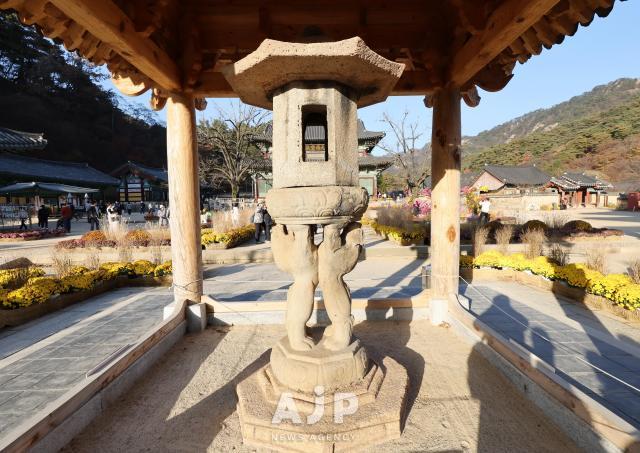
 Twin lion stone lantern in Beopjusa Temple in Boeun, North Chungcheong Province/ AJP Cho Bo-hee
 BOEUN, November 20 (AJP) - While relatively small, the county of Boeun in North Chungcheong Province has long served as a critical transport hub, imbuing it with significant strategic and cultural importance since ancient times.
This rich past is preserved in a remarkable concentration of historic cultural assets, including the revered Beopjusa Temple on Songnisan Mountain, the formidable Sannyeonsanseong Fortress, and the grand Udang traditional house.
Beopjusa Temple, a serene site founded in 553, stands as a profound testament to Korean Buddhism, boasting a history spanning 15 centuries. Once a sprawling complex with over 60 halls, the temple is historically significant as a crucible of the Maitreya (Future Buddha) belief. This utopian Buddhist philosophy holds that in times of global crisis, the Maitreya Buddha will emerge to guide humanity, offering a potent message of hope and refuge to the suffering.
The temple is instantly recognized by its towering 25-meter-high Maitreya Buddha statue, which holds the distinction of being the world's largest single bronze Buddha statue, constructed using a staggering 116 tons of bronze.
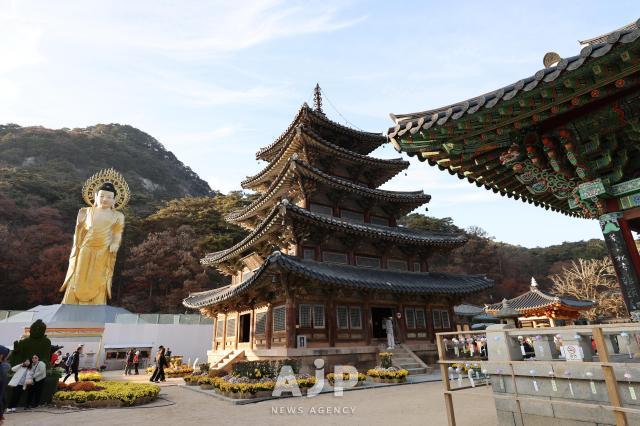 Beopjusa Temple in Boeun, North Chungcheong Province/ AJP Cho Bo-hee
 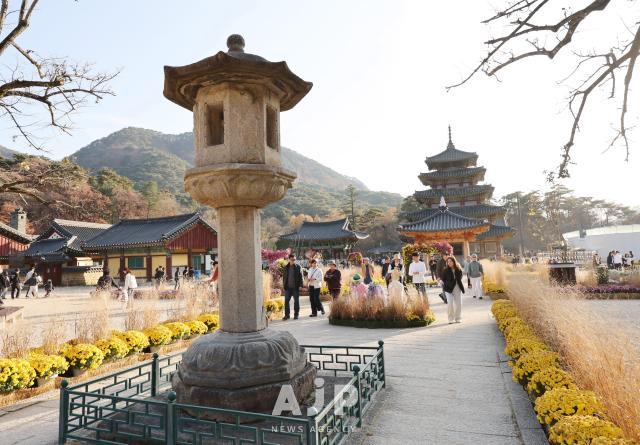 A stone lantern in Beopjusa Temple/ AJP Cho Bo-hee
 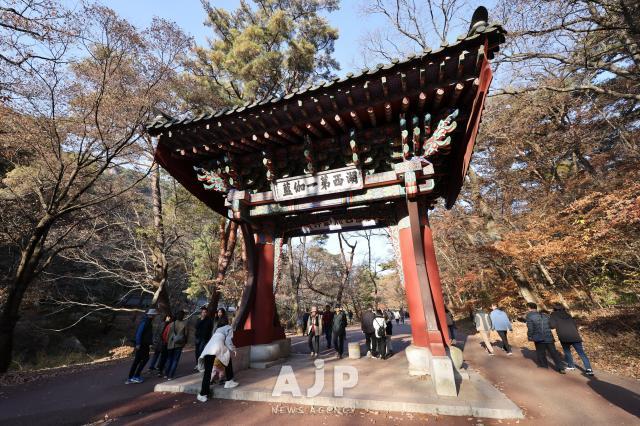 The entrance gate to Beopjusa Temple/ AJP Cho Bo-hee
 Another architectural marvel is Palsangjeon, the sole surviving five-story wooden pagoda in South Korea. Although the current structure was rebuilt after the Japanese invasions of Korea in 1592 and underwent major repairs in 1968, its significance is undiminished. Its name is derived from the Palsangdo — eight mural paintings depicting the life of the Buddha — adorning its interior walls.
Beopjusa is also home to three National Treasures: the Palsangjeon itself; the magnificent Ssangssaja Seokdeung (twin lion stone lantern) from the ancient Silla Kingdom, celebrated for its artistic excellence; and the ingeniously designed Seokyeonji (stone lotus pond) pagoda.
A visit offers a tangible connection to the sweep of Korean history and culture. Reflecting its immense value, Beopjusa was inscribed as a UNESCO World Cultural Heritage site in 2018.
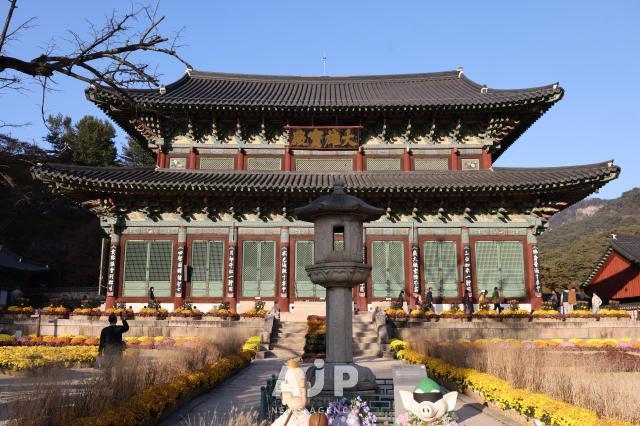 The main hall of Beopjusa Temple/ AJP Cho Bo-hee
 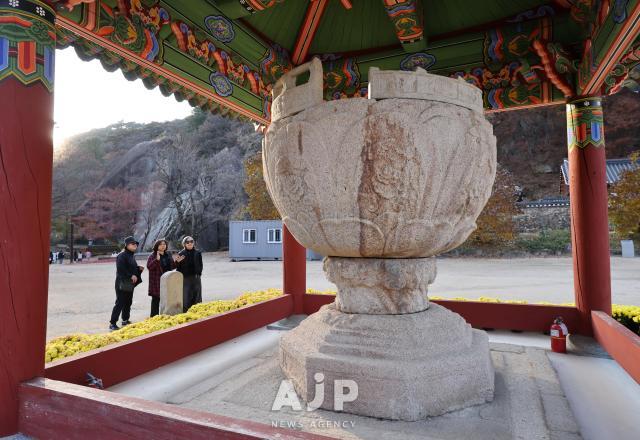 Seokyeonji (stone lotus pond) in Beopjusa Temple/ AJP Cho Bo-hee
 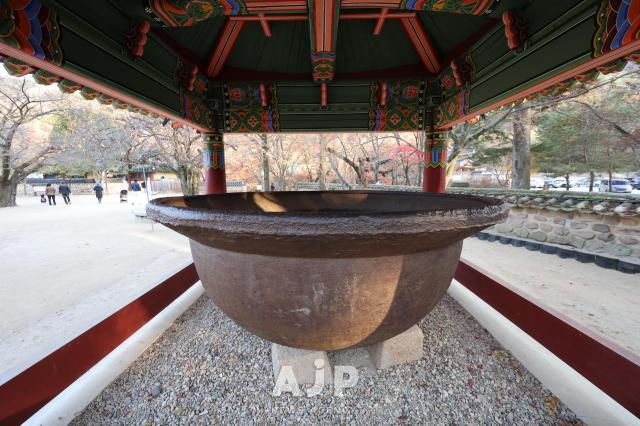 An iron pot in Beopjusa Temple/ AJP Cho Bo-hee
 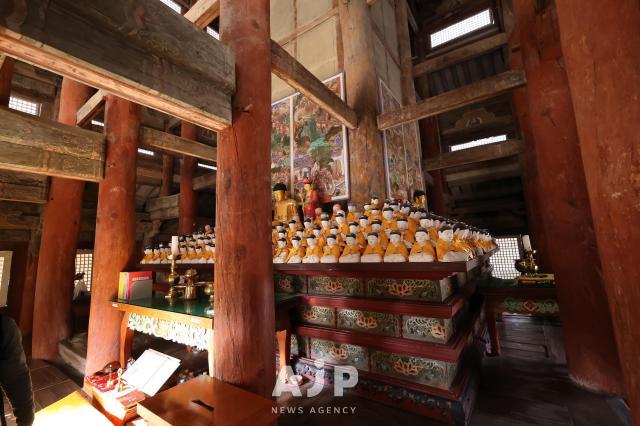 Buddha statues inside Palsangjeon in Beopjusa Temple/ AJP Cho Bo-hee
 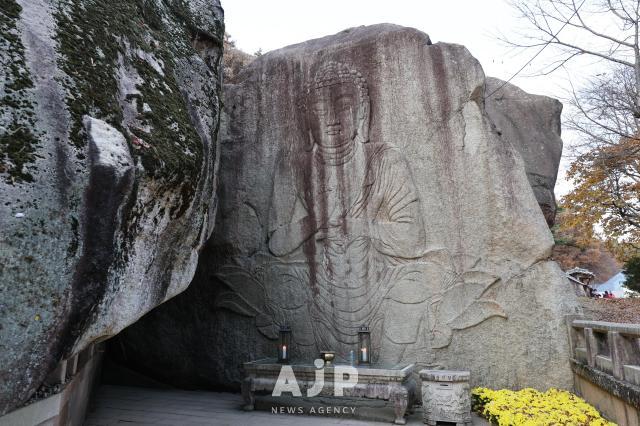 A rock-carved Buddha dating back to the Goryeo Dynasty/ AJP Cho Bo-hee
 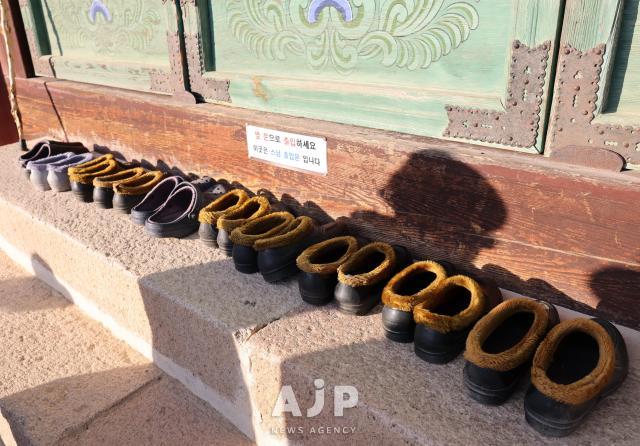 Monks' shoes placed in order/ AJP Cho Bo-hee
 Tracing the ridge of Ojeongsan Mountain, 325 meters above sea level, is the imposing Sannyeonsanseong Fortress. This stone-piled citadel was constructed in 470. Its name, which translates to "3-year mountain fortress," is attributed to the fact that its construction took exactly three years, as recorded in the Samguk Sagi (History of the Three Kingdoms).
The fortress walls extend for 1,640 meters, reaching heights of 12 to 20 meters and widths of 8 to 10 meters. The scale of the undertaking is staggering; estimates suggest over 10 million stones were used, leading to the local legend that the stones of Boeun were exhausted during its construction. A rewarding hike along the walls from the main gate typically takes about an hour and a half.
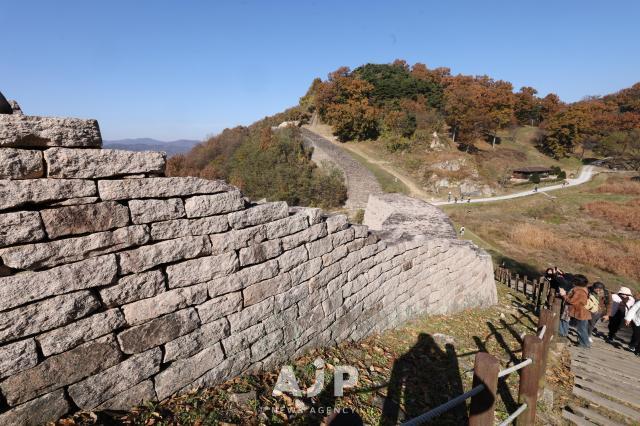 Sannyeonsanseong Fortress/ AJP Cho Bo-hee
 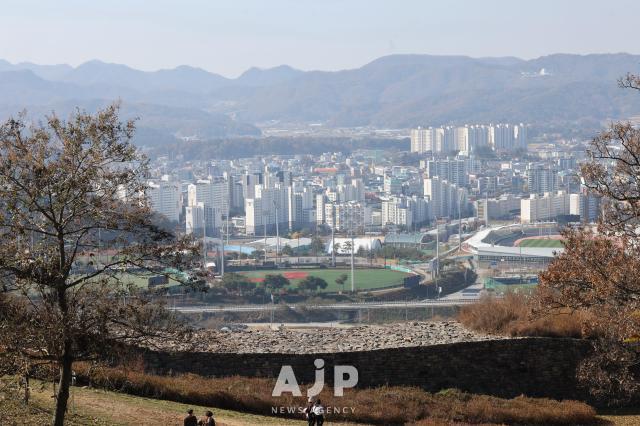 A view of Boeun from Sannyeonsanseong Fortress/ AJP Cho Bo-hee
 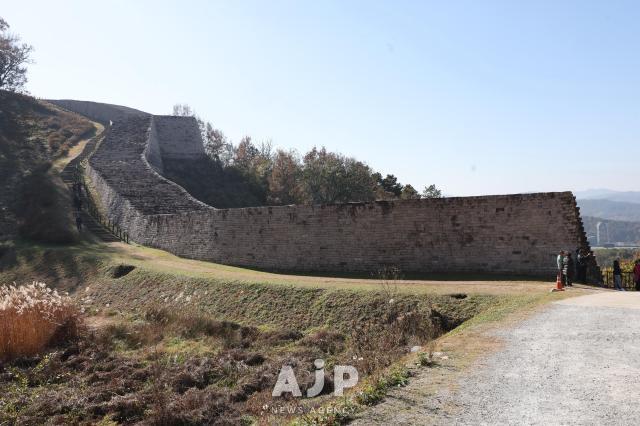 Sannyeonsanseong Fortress/ AJP Cho Bo-hee
 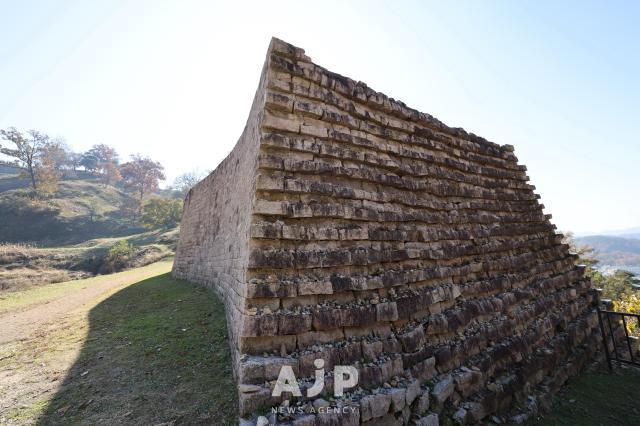 Sannyeonsanseong Fortress/ AJP Cho Bo-hee
 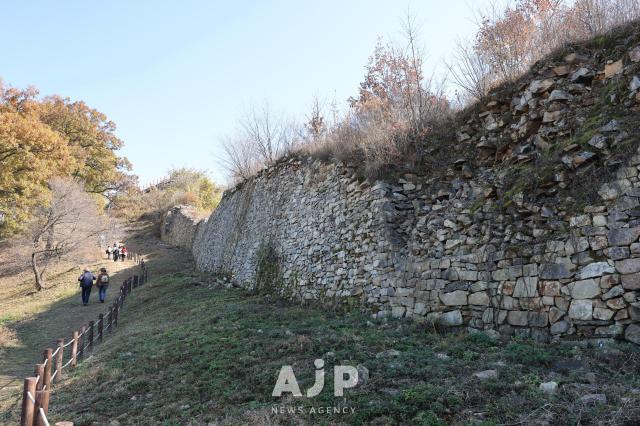 Sannyeonsanseong Fortress/ AJP Cho Bo-hee
 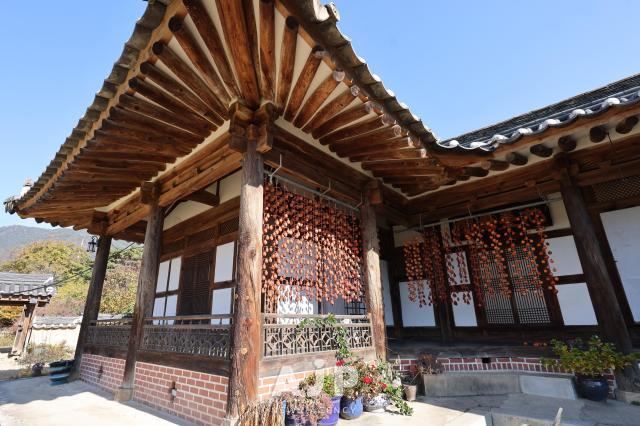 The interior of the Udang House with dried persimmons hanging/ AJP Cho Bo-hee
 Completing the historical tour is the Udang Gotaek, a monumental hanok (traditional Korean house) belonging to the Seon family, built between 1919 and 1921. Comprising 134 rooms, it is recognized as the largest private residence in South Korea built in the traditional style.
The house is situated amidst a tranquil pine forest on a wide delta where streams converge, creating an idyllic setting where the grand architecture harmonizes perfectly with the natural landscape.
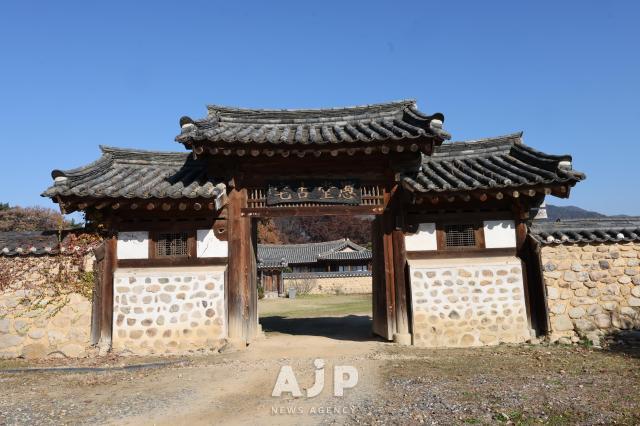 The main gate to the Udang House/ AJP Cho Bo-hee
 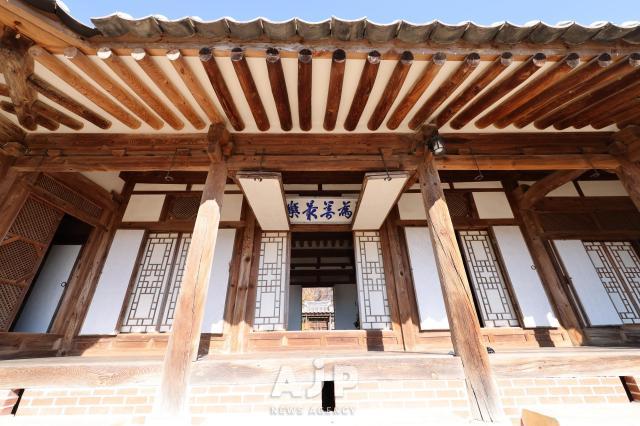 A guest room at Udang House/ AJP Cho Bo-hee
 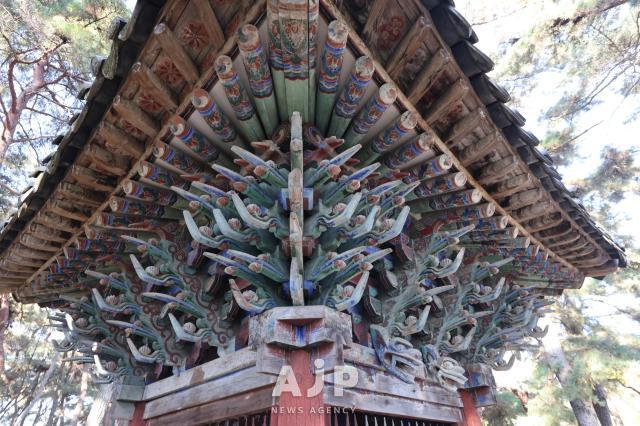 A pavilion/ AJP Cho Bo-hee
 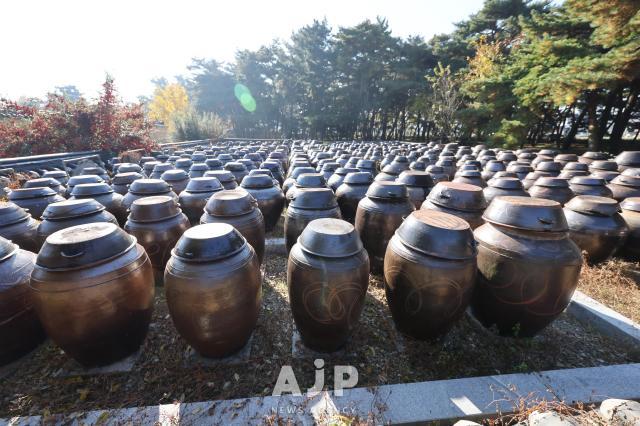 Traditional Korean earthenware jars (Jangdokdae) at Udang House/ AJP Cho Bo-hee
 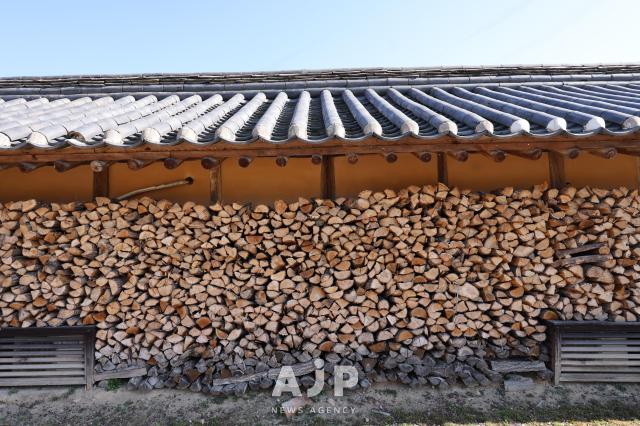 Firewood stacked in the storage shed of Udang House/ AJP Cho Bo-hee
 Cho Bo-hee 부장 jobo@ajupress.com
![[포토] 폭설에 밤 늦게까지 도로 마비](https://image.ajunews.com/content/image/2025/12/05/20251205000920610800.jpg)
![[포토] 국회 예결위 참석하는 김민석 총리](https://cphoto.asiae.co.kr/listimg_link.php?idx=2&no=2025110710410898931_1762479667.jpg)
![[포토] 알리익스프레스, 광군제 앞두고 팝업스토어 오픈](https://cphoto.asiae.co.kr/listimg_link.php?idx=2&no=2025110714160199219_1762492560.jpg)
![[포토] 예지원, 전통과 현대가 공존한 화보 공개](https://image.ajunews.com/content/image/2025/10/09/20251009182431778689.jpg)
![[포토]두산 안재석, 관중석 들썩이게 한 끝내기 2루타](https://file.sportsseoul.com/news/cms/2025/08/28/news-p.v1.20250828.1a1c4d0be7434f6b80434dced03368c0_P1.jpg)
![[작아진 호랑이③] 9위 추락 시 KBO 최초…승리의 여신 떠난 자리, KIA를 덮친 '우승 징크스'](http://www.sportsworldi.com/content/image/2025/09/04/20250904518238.jpg)
![블랙핑크 제니, 최강매력! [포토]](https://file.sportsseoul.com/news/cms/2025/09/05/news-p.v1.20250905.ed1b2684d2d64e359332640e38dac841_P1.jpg)
![[포토] 아홉 '신나는 컴백 무대'](http://www.segye.com/content/image/2025/11/04/20251104514134.jpg)
![블랙핑크 제니, 매력이 넘쳐! [포토]](https://file.sportsseoul.com/news/cms/2025/09/05/news-p.v1.20250905.c5a971a36b494f9fb24aea8cccf6816f_P1.jpg)
![[포토]첫 타석부터 안타 치는 LG 문성주](https://file.sportsseoul.com/news/cms/2025/09/02/news-p.v1.20250902.8962276ed11c468c90062ee85072fa38_P1.jpg)
![[포토] 박지현 '아름다운 미모'](http://www.segye.com/content/image/2025/11/19/20251119519369.jpg)
![[포토] 김고은 '단발 여신'](http://www.segye.com/content/image/2025/09/05/20250905507236.jpg)
![[포토] 키스오브라이프 하늘 '완벽한 미모'](http://www.segye.com/content/image/2025/09/05/20250905504457.jpg)
![[포토] 박지현 '순백의 여신'](http://www.segye.com/content/image/2025/09/05/20250905507414.jpg)
![[포토] 발표하는 김정수 삼양식품 부회장](https://image.ajunews.com/content/image/2025/11/03/20251103114206916880.jpg)
![[포토] 언론 현업단체, "시민피해구제 확대 찬성, 권력감시 약화 반대"](https://image.ajunews.com/content/image/2025/09/05/20250905123135571578.jpg)
![[포토] '삼양1963 런칭 쇼케이스'](https://image.ajunews.com/content/image/2025/11/03/20251103114008977281.jpg)
![[포토]끝내기 안타의 기쁨을 만끽하는 두산 안재석](https://file.sportsseoul.com/news/cms/2025/08/28/news-p.v1.20250828.0df70b9fa54d4610990f1b34c08c6a63_P1.jpg)
![[포토] 한샘, '플래그십 부산센텀' 리뉴얼 오픈](https://image.ajunews.com/content/image/2025/10/31/20251031142544910604.jpg)
![[포토] 아이들 소연 '매력적인 눈빛'](http://www.segye.com/content/image/2025/09/12/20250912508492.jpg)
![[포토] 김고은 '상연 생각에 눈물이 흘러'](http://www.segye.com/content/image/2025/09/05/20250905507613.jpg)
![[포토]두산 안재석, 연장 승부를 끝내는 2루타](https://file.sportsseoul.com/news/cms/2025/08/28/news-p.v1.20250828.b12bc405ed464d9db2c3d324c2491a1d_P1.jpg)
![[포토] 키스오브라이프 쥴리 '단발 여신'](http://www.segye.com/content/image/2025/09/05/20250905504358.jpg)